Visuals
The industrial core
A five-year roadmap positioning a 1.6-square-mile, land-locked Broward County town as a business-friendly industrial and logistics cluster — grounded in market data and built for realistic implementation.
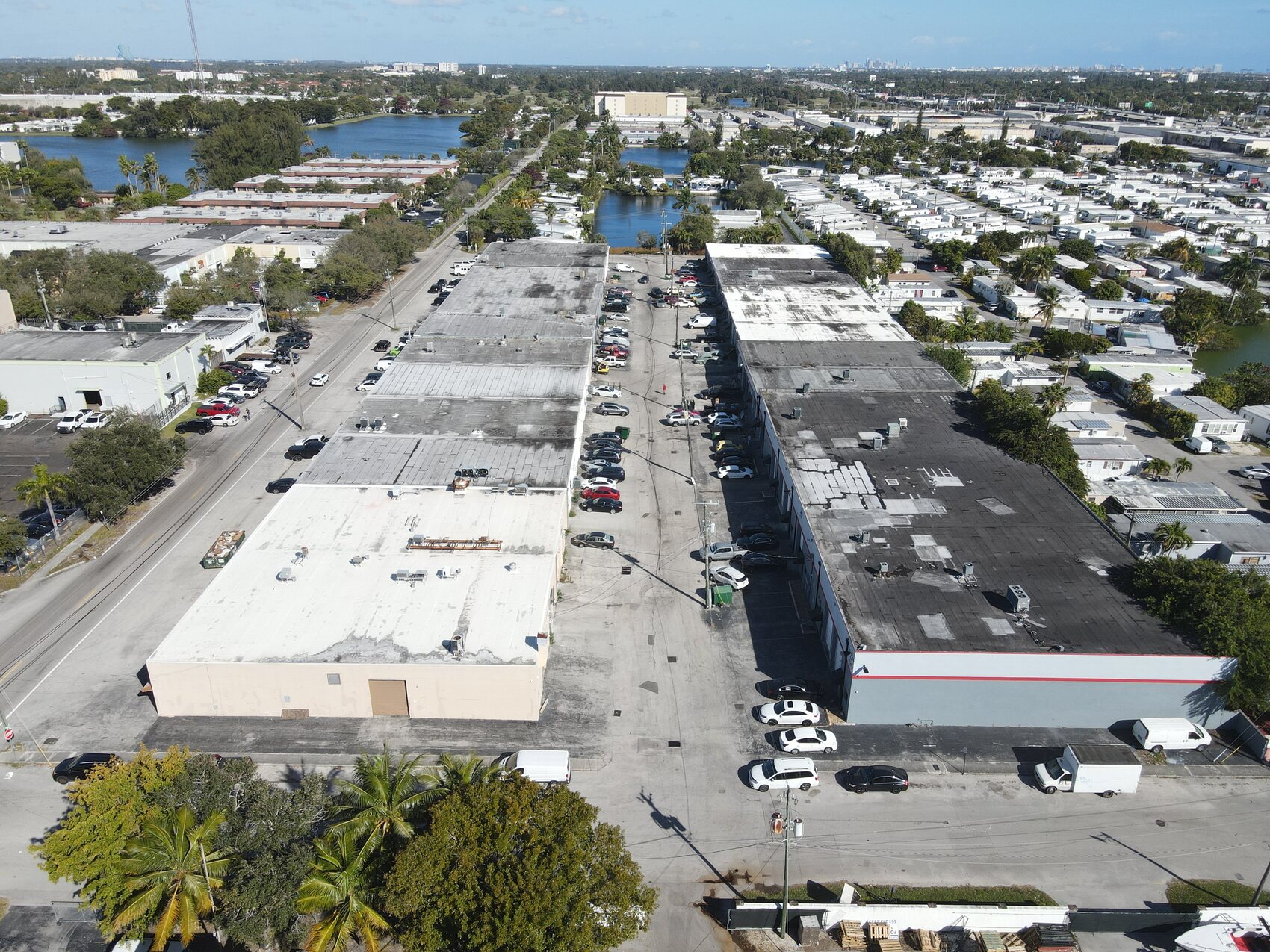
Pembroke Park is a land-locked community of roughly 1.6 square miles wedged between Interstate 95 and Florida's Turnpike, with limited developable land and a large seasonal population. Despite those constraints, it has become a genuine center for employment — more than 1,000 businesses clustered across roughly 450 acres of industrial, manufacturing, logistics, and distribution uses, anchoring a stable tax base that funds Town services.
BusinessFlare® was engaged to assess the state of the local economy, current market trends, and the lingering impacts of the pandemic, then translate that analysis into a five-year strategic plan — a guidebook organized around five goals with strategies and action steps, adopted by the Town on January 24, 2024 and designed as a living benchmark for quarterly reviews.
Pembroke Park's economic strength is real but under-recognized: industry supplies roughly 56% of general-fund revenue and the Town hosts marquee names like Coca-Cola, Amazon, Chef's Warehouse, and Safelite, yet many of its own businesses identify as Hollywood or Hallandale Beach rather than Pembroke Park. Closing that identity gap — through consistent branding, signage reform, and placemaking — is the highest-leverage move the Town can make to protect and grow its tax base.
Five economic-development goals, each backed by data-driven strategies and realistic action steps.
The plan prioritizes expanding the clusters that already define Pembroke Park — logistics and distribution, the food & beverage supply chain, design firms, and specialty automotive — while identifying opportunity sites and pairing attraction with retention support.
Because many local businesses market themselves under neighboring city names, the Town's identity requires deliberate, consistent messaging — spotlighting its design, food & beverage, and specialty-automotive 'cool factor,' plus rebranding its stretch of Hallandale Beach Boulevard.
Physical improvements focus on the most visible business district — 30th Avenue, seen directly from I-95 — with wayfinding, gateways, and streetscape, plus infrastructure investment and corridor beautification.
With limited vacant land, residential growth is challenging. The plan encourages mixed-use along Hallandale Beach Boulevard and positions the Town for families, while acknowledging the tension of siting housing near industrial employment.
The plan targets the regulatory levers holding the Town back — most notably a restrictive signage ordinance — alongside land-development regulations, incentives, and a land acquisition/disposition strategy.